Lighting
Lighting the garden, not the neighbors.
A few warm lights in the right places make a yard usable until ten at night and visible from the kitchen window in December. Low voltage, brass, 2700K, $5,000 to $22,000.
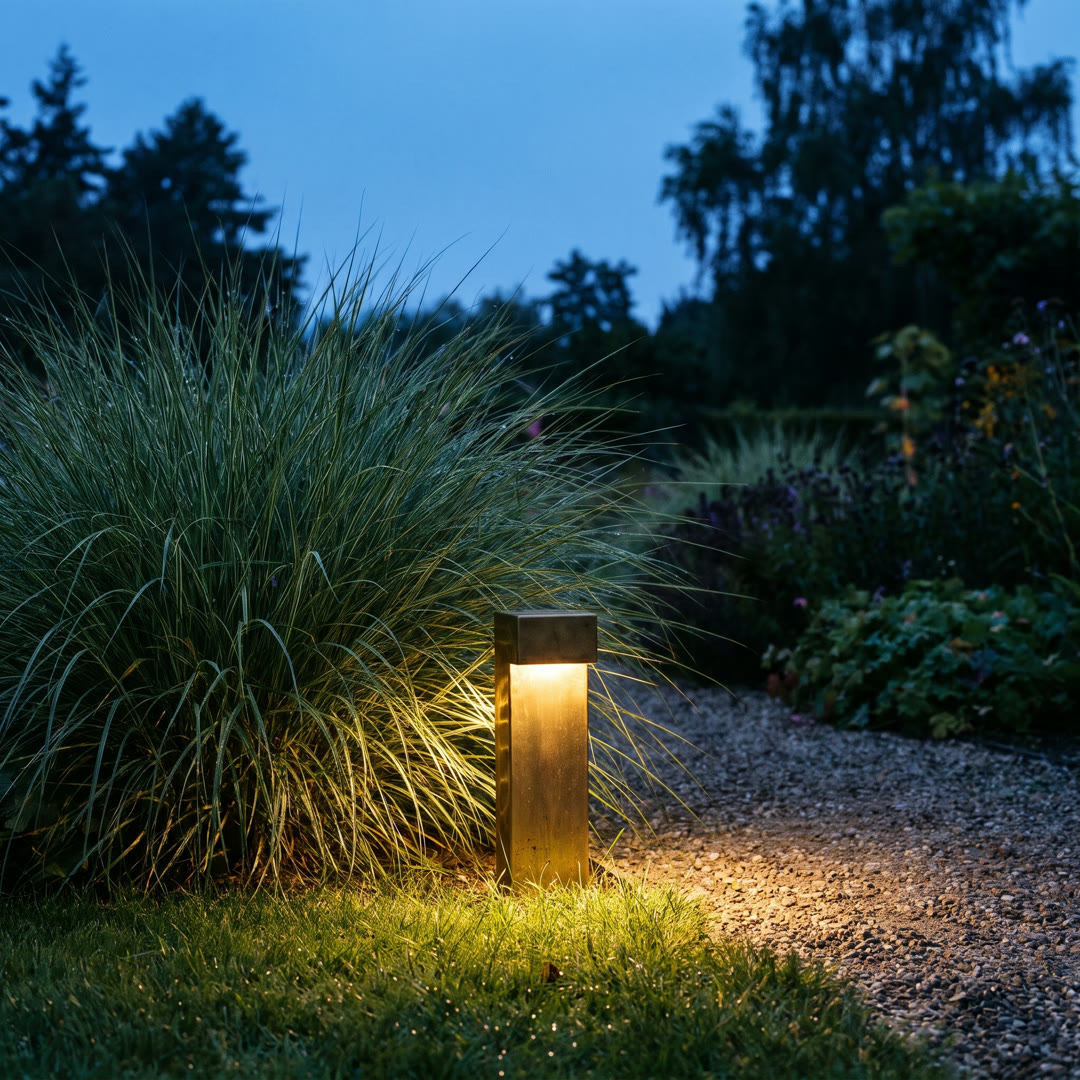
Our rules
You should see the garden lit. You should never see the light.
- 2700K only. Warm, like a candle, not the blue white of a parking lot.
- Solid brass fixtures. They go brown and then stop changing. Aluminum pits in five years.
- Low voltage, 12 volts, on a transformer with an astronomic timer that tracks sunset.
- Shielded, aimed down or into a tree. Nothing points at a window, yours or the neighbor's.
- Fewer fixtures than you expect. A typical yard takes twelve to twenty, not forty.
What we light
Steps first, trees second, everything else maybe.
Steps and level changes get lit for safety. Then two or three trees, from below, because an uplit oak is the best thing a yard does at night. Then paths, and only enough to find your way. Then the kitchen and the table, on a dimmer.
- Path and step lights
- $280 to $420 each, installed
- Tree uplights
- $340 to $520 each, installed
- Transformer and timer
- $900 to $1,800
- Typical yard
- $5,000 to $22,000 all in
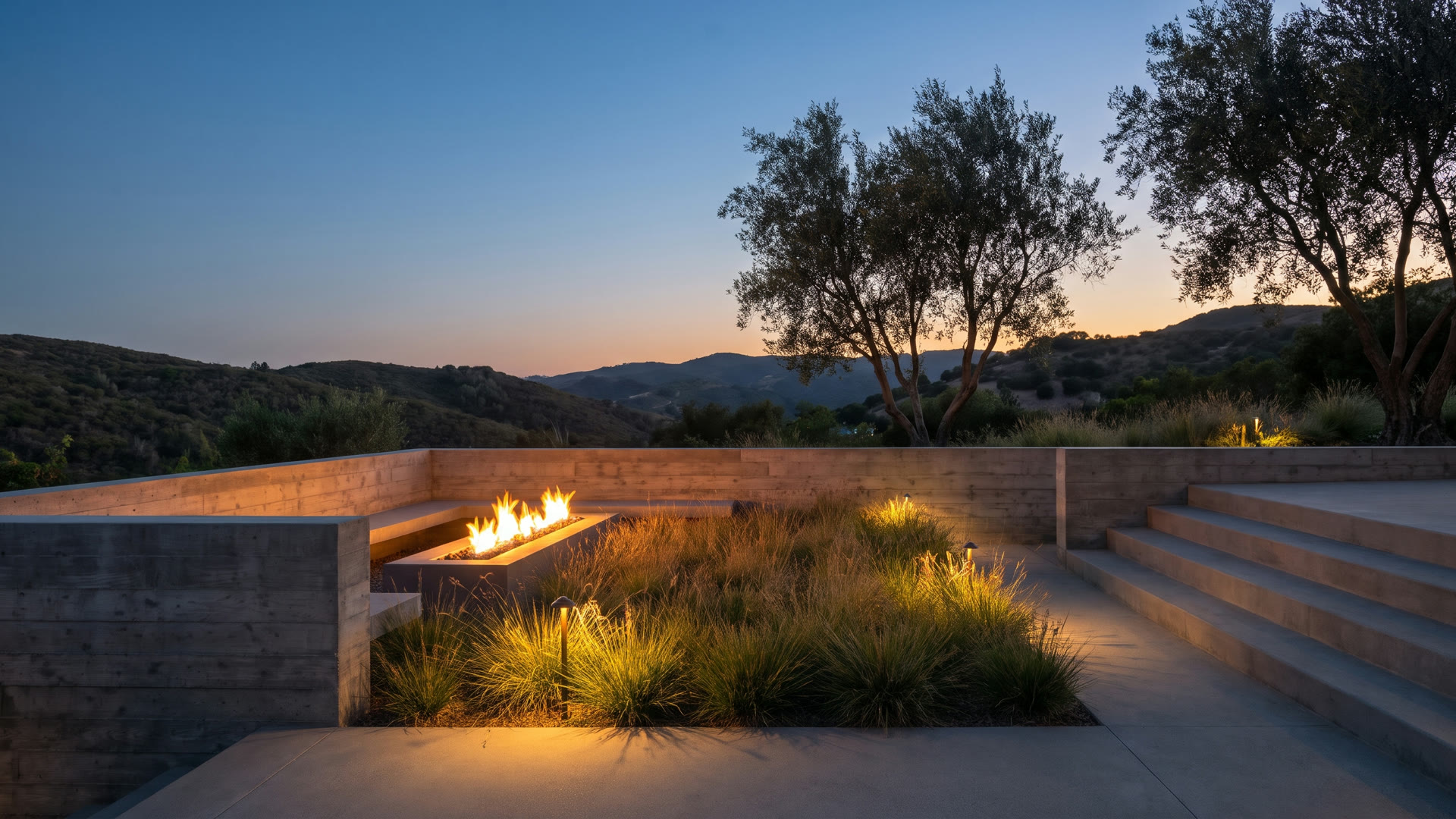
The aiming night
Every lighting job ends with an evening visit. You stand in the yard after dark with our electrician and we aim every fixture, move the ones that are wrong, and pull the ones that are too many. It takes about an hour and it is the most important hour of the job.
We come back once more, a month later, after the plants have settled and you have lived with it. Lighting is also covered under our maintenance plans: bulbs, timer drift and fixtures knocked by a mower all get fixed on the monthly visit.
Lighting adds about a week to a build and is the last thing installed, after planting.