Planting
Planting for a dry state.
A garden that lives on a third of the water a lawn drinks and looks better in every month of the year. Lawn removal, soil work, plants on drip and the rebate paperwork, $12,000 to $60,000.
Why natives
A plant that evolved on this hillside does not need you to keep it alive. That is the case for natives.
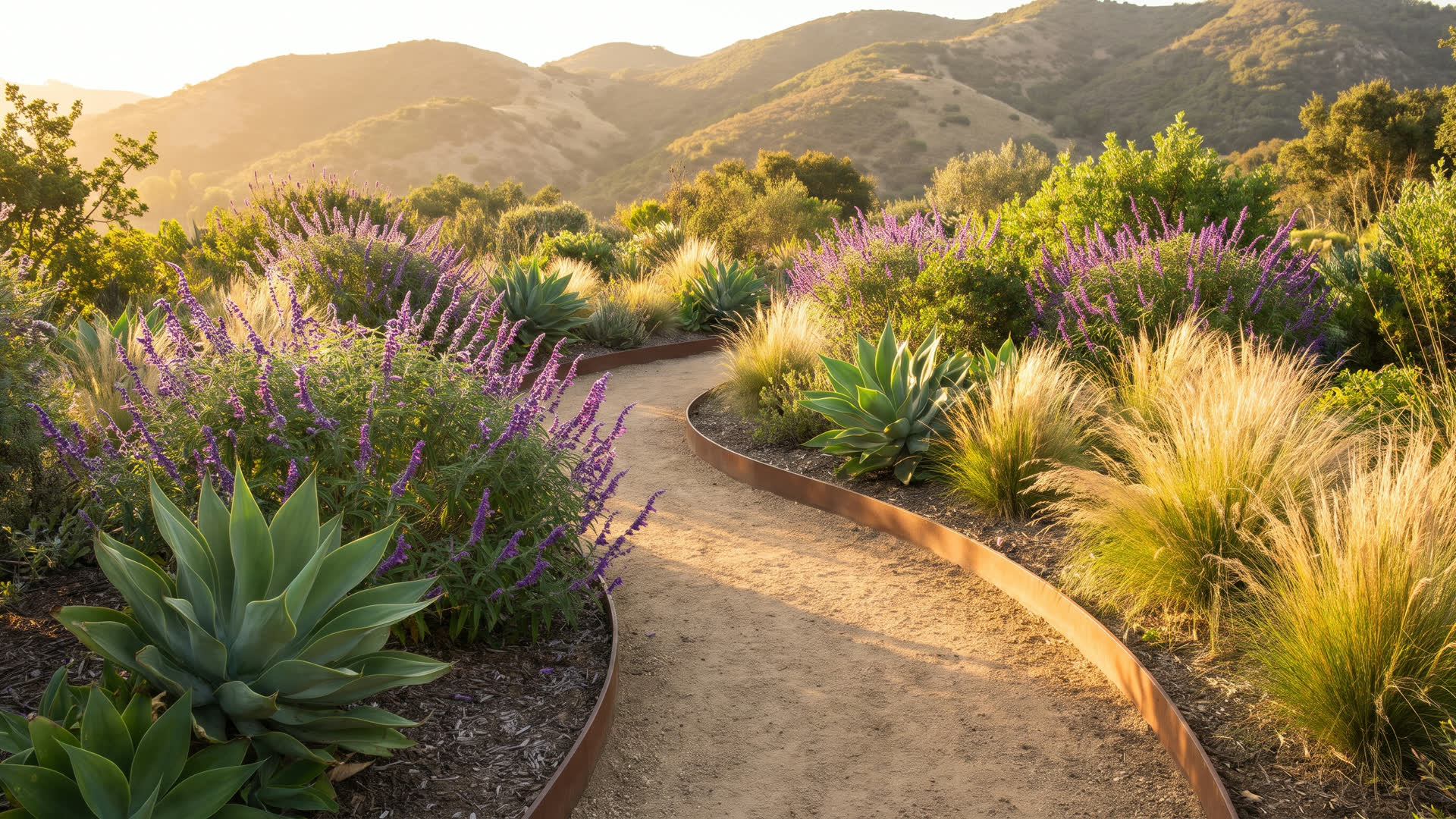
About two thirds of what we plant is native to California, and most of the rest comes from the Mediterranean, South Africa or Australia, places with the same wet winter and dry summer. Once established, after the first two summers, these plants want water every two or three weeks, not every other day.
They also feed things. Ceanothus and manzanita carry bees in March. Salvia carries hummingbirds all summer. Toyon berries carry the robins in December. A lawn carries nothing.
The palette
Thirty plants we know will live here.
We work from a list of about thirty plants that have survived our own test beds and a decade of client gardens. A short slice of it, in the order we plant it:
- Coast live oak / Quercus agrifolia / tree / no summer water
- Olive, fruitless / Olea europaea 'Swan Hill' / tree / low
- Manzanita / Arctostaphylos 'Howard McMinn' / shrub / very low
- Ceanothus / Ceanothus 'Ray Hartman' / shrub / very low
- Toyon / Heteromeles arbutifolia / shrub / very low
- Deer grass / Muhlenbergia rigens / grass / low
- Cleveland sage / Salvia clevelandii / perennial / very low
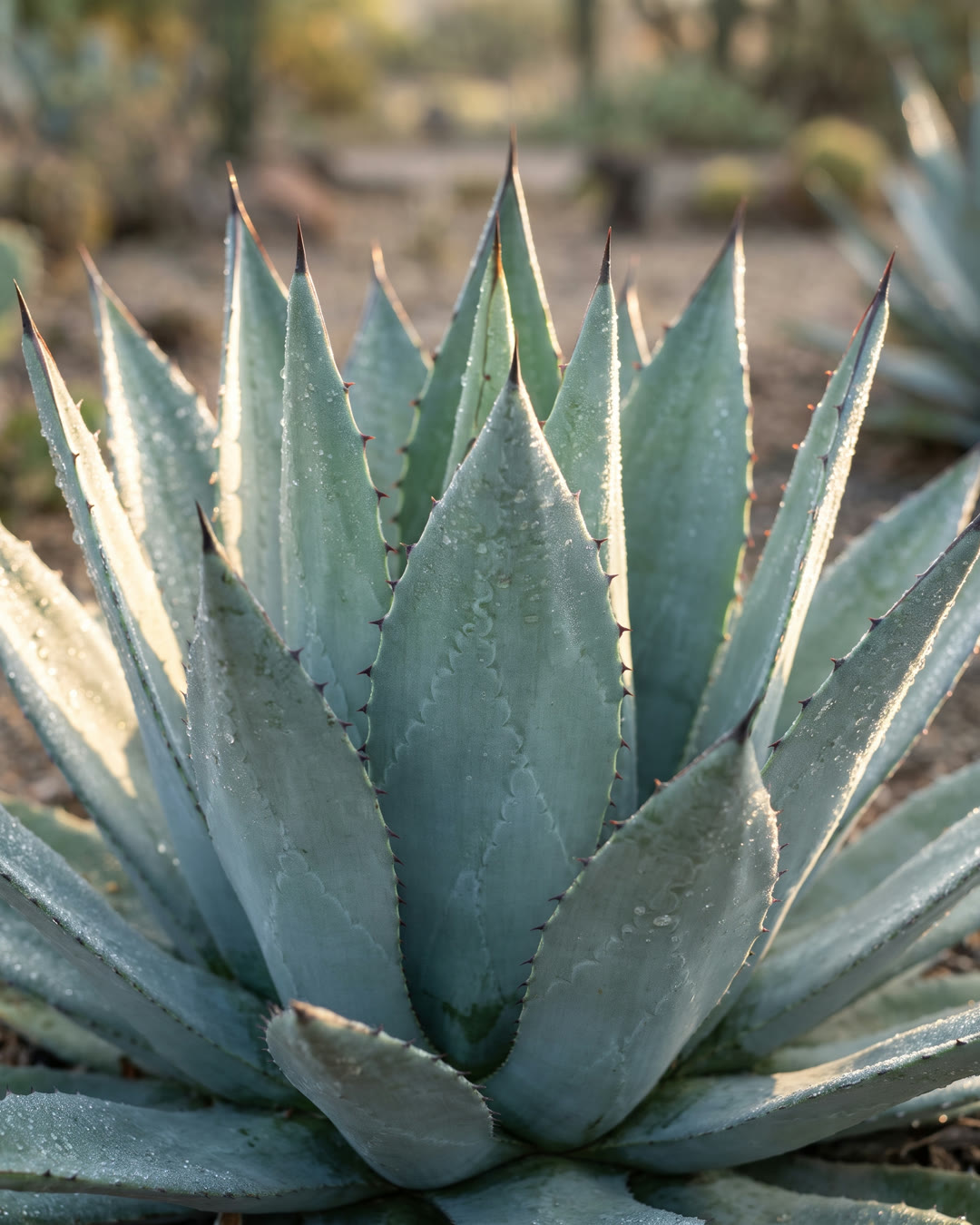
- Blue agave / Agave americana / succulent / none
- Creeping thyme / Thymus serpyllum / groundcover / low
Lawn conversion
A typical 1,500 square foot front lawn converts for $18,000 to $32,000: sod removal, sheet mulch, drip, plants in one and five gallon sizes, three inches of mulch and a controller.
Valley Water's Landscape Rebate Program pays a set amount per square foot of lawn replaced, with a cap per property, if the new garden meets their plant and irrigation rules. Ours always do. We file the pre-inspection, the application and the final inspection for you. The rebate usually covers 10 to 20 percent of a front yard conversion.
Planting season is October to March. Plants put in then root through the rain and need half the summer water of a spring planting.